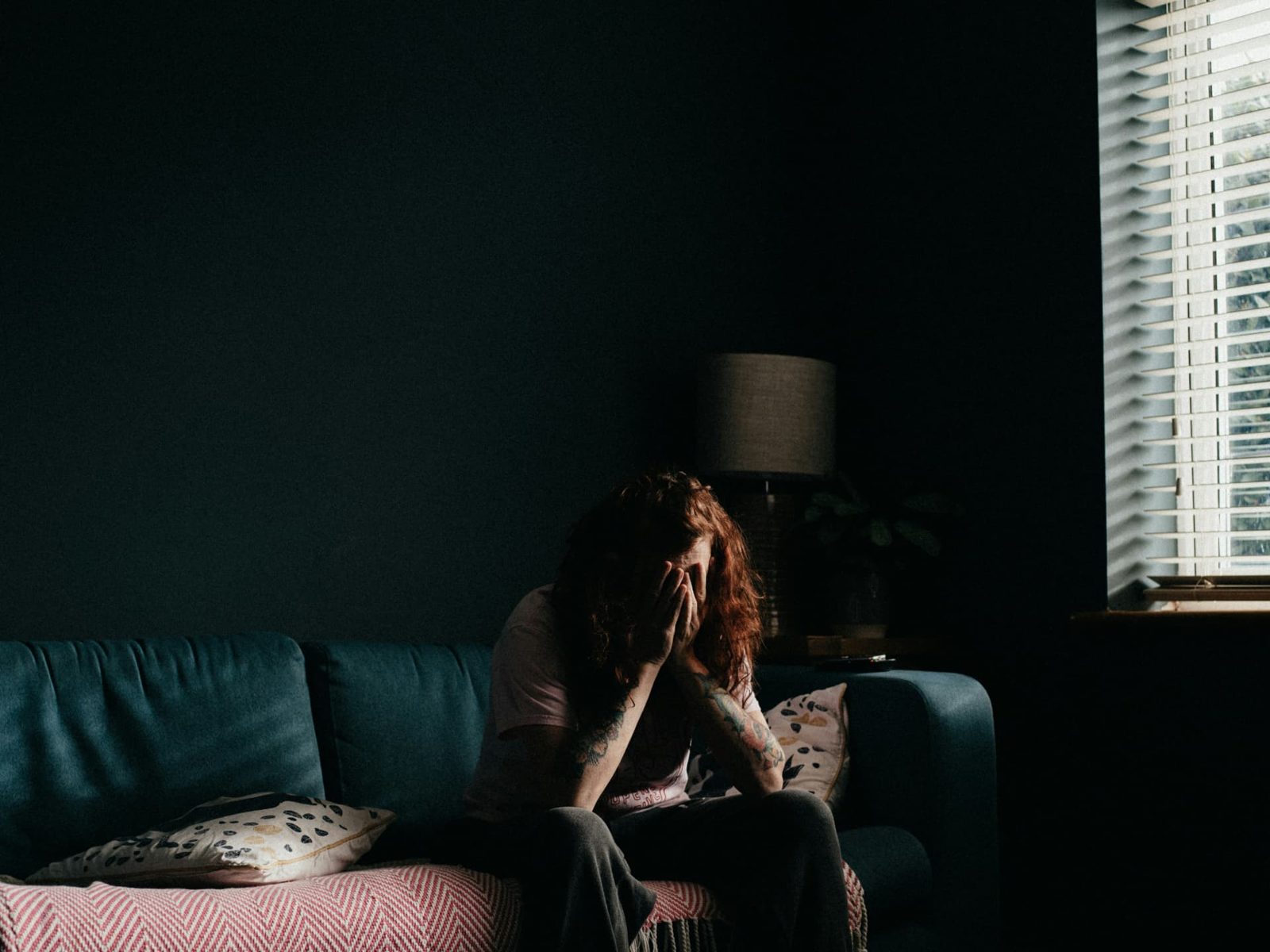
Somebody’s told you to “just relax.” Maybe a few hundred times. Maybe you’ve told yourself, standing in the kitchen at 10pm with your heart pounding over an email you haven’t even opened yet. And if relaxing were that simple, you’d have done it already, right?
Here’s what I believe after years of working with driven, capable women in Missoula: calm isn’t a personality trait. It’s not that some people were born chill and the rest of us are doomed to overthink. Calm is a capacity. It’s something your nervous system can build, the same way your legs build strength over a season of riding. The nervous system regulation techniques for anxiety in this post are where that building starts.
A quick note before we dig in. These tools are meant to support you, not replace care from a mental health professional. If anxiety is running your life, please have a therapist or counselor in your corner too, and if you’re ever in crisis, you can call or text 988 any time. Taking care of your mind and your body at the same time isn’t overkill. It’s smart.
Why Your Anxiety Doesn’t Listen to Logic
You’ve probably noticed that you can know you’re safe and still feel like you’re not. Your brain says “it’s just a Slack message,” and your body responds like there’s a mountain lion on the trail. That’s not you being irrational. It’s your nervous system doing its job a little too well.
Your nervous system is constantly scanning for safety and danger below the level of conscious thought. When it decides something is a threat, it hits the gas. Heart rate goes up, breath gets shallow, muscles tighten, and digestion pauses. All of that happens before your thinking brain gets a vote.
That’s why talking yourself out of anxiety so often fails. Most information travels from your body up to your brain, not the other way around, so the most effective tools start in the body.
Did You Know? Around 80% of the fibers in your vagus nerve carry signals from your body to your brain. Your breath, posture, and heart rhythm are constantly telling your brain whether you’re safe. Change the signal, and you change the message.
The Vessel Behind the Anxiety
Here’s the analogy I use with every person who walks into my office. Your nervous system is a vessel designed to hold life, and stress pours in from 3 buckets:
- Physical: posture, old injuries, that crash at the bike park, sleep debt
- Emotional: work, relationships, family, the pressure you put on yourself
- Chemical: food, caffeine, alcohol, what you put on your skin, smoke season air
When the vessel’s small or overfilled, it spills over. For a lot of women, anxiety is 1 of the main ways that overflow shows up. Alongside it you might notice racing thoughts at 3am, a tight chest, a stomach in knots, or a short fuse you don’t recognize.
This matters because it changes the goal. The techniques below help you drain a little out of the vessel in the moment. Long term, the real win is building a bigger vessel, so the same kind of day doesn’t overflow you anymore. We’ll cover both.
In-the-Moment Nervous System Regulation Techniques for Anxiety
These are your “right now” tools. They work fast because they go straight through the body. Try a few and see which ones your system responds to best, because everyone’s a little different.
1. The Physiological Sigh
Take a full breath in through your nose, add a second short sip of air on top of it, then let out a long, slow exhale through your mouth. Repeat 2 or 3 times. A 2023 Stanford study found that 5 minutes a day of this “cyclic sighing” improved mood and lowered breathing rate more than mindfulness meditation did over the same timeframe. It’s my go-to because you can do it in a meeting and nobody notices.
2. Make Your Exhale Longer Than Your Inhale
Breathe in for 4 counts and out for 6 to 8. Your inhale nudges your heart rate up slightly and your exhale brings it down, so a longer exhale gently taps the brakes. If box breathing has ever made you feel more wound up (it does for some people), try this instead.
3. Orient to the Room
Anxiety narrows your focus. Slowly turn your head and let your eyes land on 5 things around you, naming them if it helps. The window. The plant you keep forgetting to water. Your dog doing something ridiculous. Moving your eyes and head tells your brain you’ve checked the area and there’s no threat.
4. Cold Water on Your Face
Splash cold water on your face or hold a cold pack across your eyes and cheeks for 15 to 30 seconds. This triggers the dive reflex, which naturally slows your heart rate. It’s the quickest reset I know for a full spiral.
5. Hum, Sing, or Chant
Your vagus nerve runs right past your vocal cords, and humming creates a vibration that stimulates it. A long “mmm” on the exhale is a legit regulation tool. Singing in the car on the way up to Snowbowl counts too. Loudly. With feeling.
6. Push Against Something
Press your palms together hard for 10 seconds, or push against a wall like you’re trying to move it, then release. That big muscle effort gives all that fight or flight energy somewhere to go, and the release afterward is a clear “we’re done” signal.
7. Move Side to Side
Walking, swinging your arms, or gently tapping your left and right shoulders back and forth can help settle a racing mind. Bonus points for a walk on the Riverfront Trail, because fresh air and moving water bring their own kind of calm.
Putting It Together for a 3am Spiral
Here’s how I’d stack a few of these when your brain won’t shut off in the middle of the night:
- Stay in bed and don’t check the time. Seeing 3:12am just hands your brain something new to worry about.
- Do 3 physiological sighs. Slow and quiet, so your partner keeps sleeping.
- Switch to long exhale breathing. In for 4, out for 8, for a few minutes.
- Press your feet into the mattress for 10 seconds, then let them go heavy.
- Pick 1 boring thing to picture in detail, like every turn of a favorite trail from the trailhead up.
Most nights, you’ll be asleep before you get to the top.
Insider Tip from Dr. Liz: Practice these when you’re not anxious. Your nervous system learns through repetition, so a tool you’ve rehearsed 20 times on a calm Tuesday will actually show up for you on a hard Thursday.
Your Quick Reference Chart
Screenshot this one for your phone.
| Technique | Time Needed | Best For | Public Friendly? |
|---|---|---|---|
| Physiological sigh | 30 seconds | Sudden spikes, before meetings | Yes |
| Long exhale breathing | 2 to 5 minutes | Winding down, falling asleep | Yes |
| Orienting | 1 minute | Feeling trapped or overwhelmed | Yes |
| Cold water on face | 30 seconds | Full spirals, racing heart | Mostly at home |
| Humming | 1 to 2 minutes | Racing thoughts, car rides | Sort of (own it) |
| Pushing | 30 seconds | Restless, agitated energy | Yes |
| Side to side movement | 5 to 20 minutes | Rumination, mental loops | Yes |
How to Regulate Your Nervous System Naturally (Day to Day)
In-the-moment tools are great. But if you’re using them 6 times a day just to get by, that’s a sign your baseline needs attention. These daily habits are how to regulate your nervous system naturally, so you start each day with more room in the vessel.
Get Morning Light
Step outside within an hour of waking and get 10 minutes of daylight, even on a gray November morning. Light hitting your eyes early helps set your sleep and stress hormone rhythm for the whole day.
Eat Before Your Coffee
I know. I’m not taking your coffee away. Just put some protein in your body first, because caffeine on an empty stomach spikes your stress response before you’ve even checked email.
Protect Your Sleep Like It’s a Powder Day
You’d move mountains (literally) to get first chair after a big storm. Give your sleep the same respect with a consistent bedtime most nights, a cool dark room, and screens off 30 minutes before bed.
Move, But Not Always Hard
Hard workouts are a stressor. A good one, but still a stressor. If every day is a max effort trail run, your system never gets the message that it’s safe to recover, so mix in easy movement like a mellow walk, a lazy float, or gentle stretching.
Find Your People
Calm is contagious. Spending time with people who feel safe actually helps regulate your nervous system through something called co-regulation. That girls’ night isn’t a luxury. It’s maintenance.
Notice What Fills the Vessel Fastest
Alcohol, sugar crashes, doom scrolling, and back-to-back meetings with no breaks all pour into the vessel. You don’t need to eliminate everything. Just notice what fills you up fastest and turn the dial down a notch.
Did You Know? Heart rate variability (HRV), the variation in time between your heartbeats, is one of the best measures of nervous system flexibility. Higher HRV generally means your system shifts easily between gas and brake. Plenty of wearables track it now, so it’s a fun way to watch these habits working.
When Techniques Aren’t Enough: Building a Bigger Vessel
If you’ve been doing the breathwork, the journaling, and the meditation apps and you’re still anxious, it doesn’t mean you’re doing it wrong. It usually means you’ve been managing the overflow without ever changing the size of the vessel.
That’s where a holistic chiropractor for chronic stress comes in. Your spine protects your spinal cord, the main communication highway between your brain and body. When spinal joints aren’t moving well (we call that subluxation), it creates interference on that highway, and your body can get stuck reading the world as more threatening than it really is.
Think about your car. When the wheels are out of alignment, the tread wears unevenly. You don’t feel it on a single drive, but over months it becomes the pattern. Your nervous system develops patterns the same way, and adjustments help interrupt them so your brain and body can communicate clearly again.
What That Looks Like at Primal Practice
We don’t guess. Every new client starts with a 60-minute Health Breakthrough Evaluation, which includes your full history, a thorough exam, and INSiGHT scans that measure HRV, muscle tension patterns, and how your nervous system is adapting to stress. You get to see what your body’s been dealing with, and that’s often a huge relief on its own.
From there, care is built around growing your capacity, not chasing symptoms. That means adjustments paired with recovery tools like red light and resonance, so your system gets both the clearing and the time to rest and recalibrate.
It works like training. You don’t get strong from 1 trip to the gym, and you don’t build nervous system resilience from 1 adjustment. It takes consistent reps over time. That’s also the good news, though. Capacity is buildable, which means calm is buildable too.
Insider Tip from Dr. Liz: One of the first things clients usually notice isn’t less anxiety, it’s better sleep. Pay attention to that. When sleep improves, everything else tends to have more room to follow.
The Truth About Calm
You aren’t broken, and you aren’t “just an anxious person.” You’re someone whose nervous system has been carrying a lot for a long time, and it’s been doing its best to protect you. The techniques here can take the edge off today. Building a bigger vessel is how you change what tomorrow feels like.
Start with 1 technique this week, practice it when you’re calm, and notice what shifts. And if you’re in Missoula and ready to look at what’s happening underneath, we’d love to meet you. You can book your Health Breakthrough Evaluation online at primalpracticemt.com or call or text us at 406-549-8969. We’re at 2200 Holborn St.
Your body already knows how to find calm. Sometimes it just needs a little room to remember.
Peace, Love and Happiness,
Dr. Liz